



Tribute Presentation
|
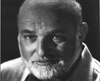
John Schlesinger is quite unashamedly a humanist director. That's a word and an attitude that isn't much in fashion in the film business these days. But frankly, we are in urgent need of more humanists like him. Most of Schlesinger's films are about people, about character; one way or another, the most perceptive of them are also about being in love and the foolish, desperate things we do in that demented state. Schlesinger's observations on the subject are typically distinguished by a mixture of compassion, irony, and emotional empathy for the quest, and the intellectual acknowledgment of love's almost inevitable failure. He has examined the theme in a variety of situations and milieus, beginning with his first feature A Kind Of Loving made in 1962. This big-screen breakthrough did not come particularly easily or early in his life. By that time, he had served in the armed forces during World War II, studied at Oxford, worked as an actor in films, on TV, and on stage and been employed as a freelance director by the BBC. It was his unexpected success with the documentary short Terminus (a slice-of-life look at a busy London train station that won him a prize at the Venice Film Festival) that opened the door to feature filmmaking. He became one of the most respected and successful directors of the 1960's, with films admired for their keen social awareness, impeccable craftsmanship and splendid performances. His gifted touch with actors helped make stars of Julie Christie, Alan Bates, Tom Courtenay and Jon Voight. Since then, he has divided his time among films, television and the stage on both sides of the Atlantic, always attempting to further our understanding of ourselves: "A director is an observer," Schlesinger once said. Clearly he observes us carefully and well - and you need only to view his films to understand that.
Filmography:
A Kind of loving (1962) |
 |
 |